

Archery Arm Guards: Do You Need One and How to Choose the Right Style
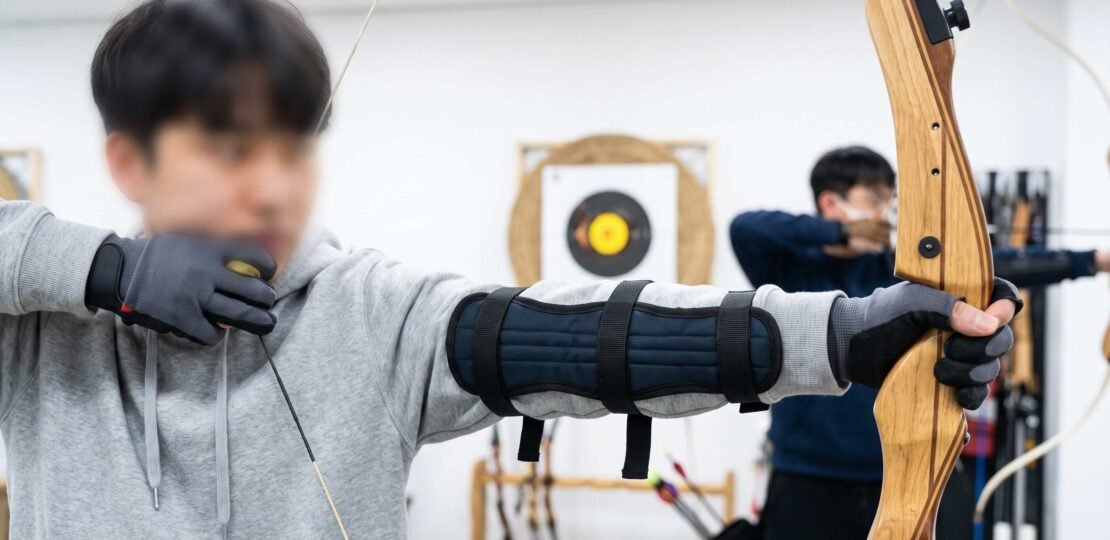
Quick answer: An archery arm guard, also called a bracer, is a protective sleeve worn on the inner forearm of your bow arm. It stops the bowstring from slapping your skin and keeps loose clothing out of the string’s path. Beginners should wear one, especially with recurve and traditional bows, until their form becomes consistent.
If you’ve ever taken a bowstring to the forearm, you already know why this piece of gear exists. It stings like a rubber band snapped at full strength, and it can leave a welt that turns purple by the next morning. The good news: a $15 archery arm guard solves the problem almost entirely while you work on your technique.
What Is an Archery Arm Guard?
An archery arm guard is a strip of stiff, protective material that straps onto the inside of your bow arm, between the wrist and elbow. Your bow arm is the one holding the bow, so for a right-handed archer, that’s the left arm. Traditional archers usually call it a bracer, and you’ll see both names used interchangeably in shops and catalogs.
Why String Slap Happens
When you release the string, it doesn’t travel in a perfectly straight line back to the bow. It snaps forward, oscillates side to side, and carries a lot of stored energy.
The problem is geometry. On most bows, the string’s path at release passes just a few inches from the inside of your forearm. If your elbow points down instead of rotating outward, or if you grip the bow with your palm wrapped tightly around it, your forearm drifts into that path. Archers call this “string slap.”
There’s a second factor called brace height, which is the distance between the string and the deepest part of the bow’s grip when the bow is strung. A lower brace height means the string stays in contact with the arrow longer and travels closer to your arm on its way forward. Many longbows and some recurves run low brace heights, which is part of why traditional archers almost always wear a bracer.
What an Arm Guard Actually Does
An arm guard does two jobs. First, it takes the hit. A firm surface deflects the string instead of letting it bite into skin, so the impact turns into a light tap instead of a welt.
Second, and this one gets overlooked, it keeps your sleeve clear of the string. A loose jacket cuff or a baggy hoodie can catch the string as it moves forward. That robs the arrow of energy, throws it off line, and can even pull the arrow off the rest. Strapping the fabric down under a guard keeps the string’s path clean, which matters a lot once you start shooting outdoors in cooler weather.
Do You Actually Need One?
Short version: if you’re a beginner, yes. The longer answer depends on what kind of bow you shoot. Archery 360’s breakdown of the beginner archery gear you need beyond the bow itself puts an arm guard on the starter list right alongside a finger tab and quiver, and we agree with that call.
Recurve Archers
Recurve shooters need an arm guard more than almost anyone. Recurves have no cams or let-off, so you hold the full draw weight at anchor, and fatigue creeps into your form fast. Add a fairly low brace height and a string that’s released off the fingers, and you have the perfect setup for a forearm hit.
Even Olympic recurve archers wear arm guards. If you’re choosing a recurve bow as your first bow, budget for an arm guard at the same time.
Compound Archers
Compound bows are more forgiving here. They typically have a higher brace height (often 6 to 7 inches), and most compound shooters use a mechanical release aid, which produces a cleaner, more consistent string path than fingers do. Plenty of experienced compound shooters never wear a guard at all.
That said, beginners still get hit. A new shooter often locks the elbow straight and rotates it inward, which puts the forearm right in the danger zone. If you’re starting with a compound, a short guard is cheap insurance for your first season, and it’s useful for keeping jacket sleeves out of the way during fall hunts.
Traditional Archers (Longbow, Barebow)
Traditional shooters are the most likely to need one, and the most likely to need a long one. Longbows often have low brace heights, and many traditional archers shoot off the shelf or off the hand with a canted bow. The string has more opportunity to contact the arm, sometimes as far up as the elbow.
Barebow shooters (recurve archers who shoot without sights or stabilizers) fall into the same group.
The Honest Nuance: An Arm Guard Doesn’t Fix Bad Form
Here’s what experienced coaches will tell you. If the string hits your arm on nearly every shot, the arm guard isn’t the real solution. Something in your grip or elbow position is off.
The usual culprits are a death grip on the bow handle, a bow arm elbow that points down at the ground, or a hyperextended elbow joint. The fix is to rotate your elbow so the crease of your inner elbow faces roughly vertical rather than toward the sky, and to let the bow rest in the meaty pad at the base of your thumb rather than squeezing it. We cover the full sequence in our guide on proper shooting form.
So think of the arm guard as a safety net while you learn. It keeps you from flinching. A shooter who’s been hit a few times starts to anticipate the sting and tense up before release, which wrecks accuracy. The guard removes the fear so you can focus on technique. Over time, you’ll notice the string touches it less and less, and that’s your sign the form is coming together.
The 5 Types of Archery Arm Guards
Most guards look similar on a shop wall. They aren’t.
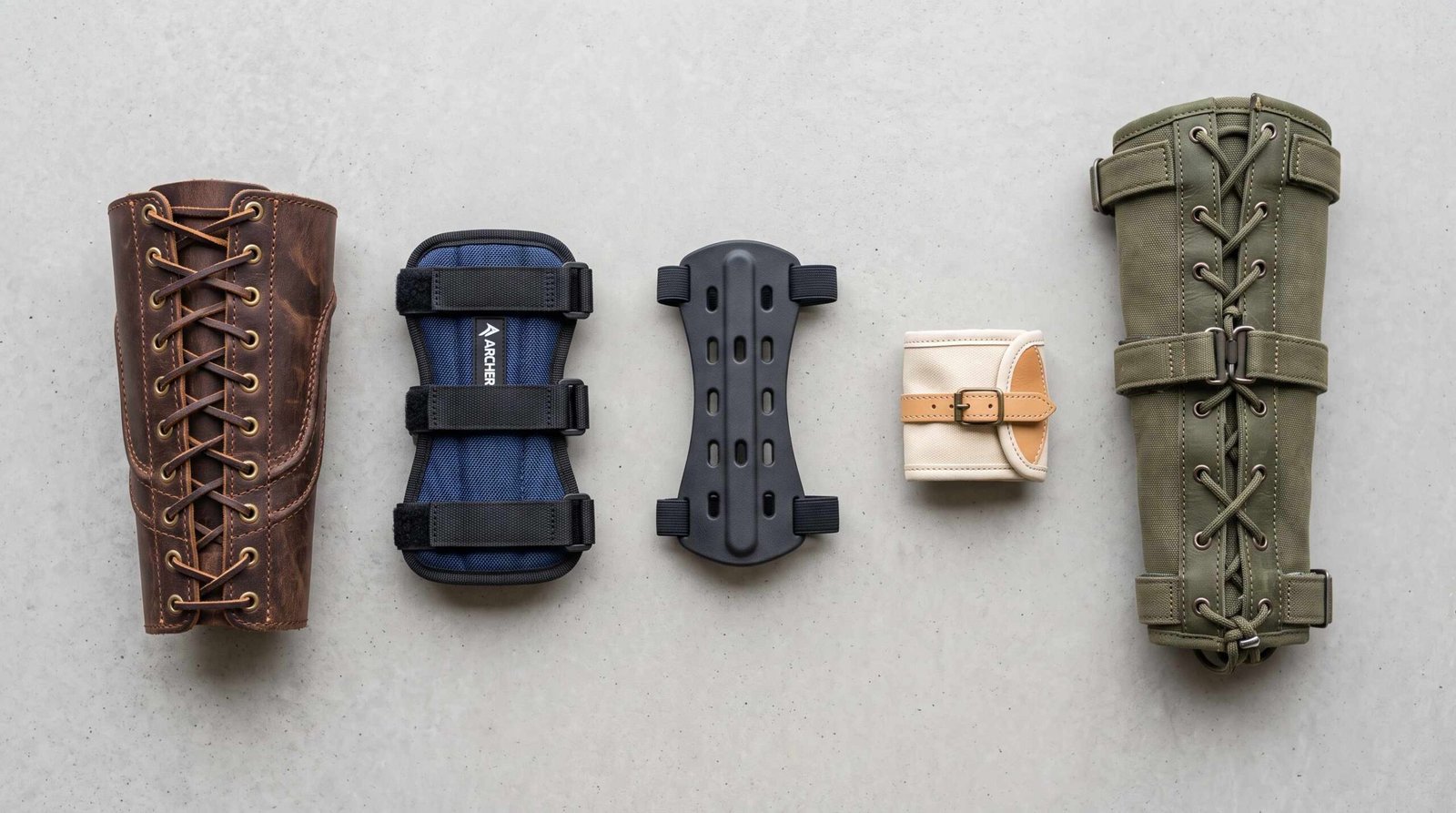
1. Leather Bracer
The classic. Leather bracers have been around for thousands of years, and they still look and feel right on a traditional setup. Thick cowhide or buffalo leather absorbs string strikes well and molds to your forearm over the first few weeks of use, so a good one fits better the longer you own it.
The tradeoffs are weight and heat. Leather is heavier than synthetics, it doesn’t breathe much, and it needs occasional conditioning. Rain soaks into it unless you treat it. Bearpaw makes lace-up and buckle versions that suit a wooden longbow.
2. Nylon / CORDURA
This is the workhorse, and it’s what most recreational archers end up wearing. These guards use a stiff plastic or composite insert covered in ballistic nylon or CORDURA fabric, a tough woven material used in military gear and luggage. They’re light, they handle sweat and rain, and they’re cheap to replace.
SAS arm guards and Bear Archery models in the $15-25 range offer reliable ballistic nylon construction with adjustable elastic straps and plastic clips. For a beginner who isn’t sure yet where archery will take them, this is the style we suggest starting with.
3. EVA Foam and Molded Plastic
Competitive recurve archers favor these. EVA foam (the same dense, lightweight foam used in shoe soles) or a thin molded plastic shell sits close to the arm with a low profile, so it’s less likely to catch the string than a bulky guard. Many have ventilation holes that keep the arm cool during long tournament days.
Beiter and Legend Archery both make well-regarded options here. Beiter’s guards in particular show up on a lot of target lines. Expect to pay more, but you get a precise fit and very little bulk.
4. Short Wrist Guard
Short guards run about 3-4 inches long and cover just the lower forearm near the wrist. They’re popular with compound shooters who rarely get hit but want minimal protection and something to hold a sleeve down. They’re barely noticeable once strapped on.
The downside: if the string strikes higher up the forearm, a short guard won’t help.
5. Full-Arm Bracer
At 9-10 inches long, full-arm bracers cover almost the entire forearm, sometimes reaching right up to the elbow. Traditional longbow and barebow shooters use them because the string path on those bows can contact the arm anywhere along its length, especially with a canted bow or a lower brace height.
They’re also a smart pick for anyone with hyperextending elbows, since those archers tend to get hit near the elbow.
| Type | Material | Length | Best For | Price Range | Pros | Cons |
|---|---|---|---|---|---|---|
| Leather bracer | Cowhide or buffalo leather | 6-9 inches | Traditional archers, longbow and historical setups | $20-50 | Molds to your arm, very durable, classic look | Heavier, retains heat, needs conditioning, absorbs water |
| Nylon / CORDURA | Ballistic nylon over a plastic insert | 6-8 inches | Beginners and recreational archers of all bow types | $10-25 | Light, weather-resistant, inexpensive, easy to clean | Less precise fit, elastic straps wear out over time |
| EVA foam / molded plastic | EVA foam or thin molded shell | 6-8 inches | Competitive recurve archers | $25-50+ | Low profile, close fit, ventilated, very light | Costs more, plastic can crack if crushed |
| Short wrist guard | Nylon, plastic, or leather | 3-4 inches | Compound shooters with clean form | $8-20 | Minimal, barely noticeable, holds sleeves down | No protection higher up the forearm |
| Full-arm bracer | Leather or nylon | 9-10 inches | Longbow and barebow shooters, hyperextending elbows | $20-45 | Maximum coverage, protects near the elbow | Bulkier, warmer, can feel restrictive |
How to Choose the Right Arm Guard
Four things matter: your bow, your arm, where you shoot, and your budget.
Match to Your Bow Type
| Bow Type | Do You Need One? | Suggested Style | Key Reason |
|---|---|---|---|
| Olympic / target recurve | Yes | EVA foam or molded plastic | Finger release and full draw weight at anchor make string contact common, and a low profile avoids catching the string |
| Beginner / recreational recurve | Yes | Nylon / CORDURA, 3 straps | Developing form means frequent string slap, and nylon is cheap and durable |
| Compound (beginner) | Strongly suggested | Short wrist guard or standard nylon | Higher brace height helps, but new shooters often rotate the elbow inward |
| Compound (experienced) | Optional | Short wrist guard | Consistent elbow rotation and a release aid keep the string clear, so a guard mostly holds sleeves down |
| Longbow | Yes | Full-arm leather bracer | Low brace height and a long string path can contact the arm all the way to the elbow |
| Barebow / traditional recurve | Yes | Full-arm bracer, leather or nylon | Shooting off the shelf or with a canted bow puts more of the forearm in the string’s path |
Sizing: How to Measure Your Forearm
A guard that’s too short leaves the strike zone exposed, and one that’s too loose slides around. Measure two things with a soft tape.
Wrist to elbow length. Measure from the crease of your wrist to the crease of your inner elbow. Most adults fall between 9 and 11 inches. The strike zone usually sits in the middle and lower half of that span, so a 7-8 inch guard covers most recurve shooters. If you get hit near the elbow, go full length.
Circumference at the widest point. Wrap the tape around the thickest part of your forearm, just below the elbow. Most adjustable guards fit a broad range, but youth archers and shooters with larger forearms should check the strap length before buying. Point Blank Archery has a solid walkthrough on sizing an arm guard and checking sleeve clearance at full draw, written by a USA Archery Level 3 NTS certified coach, and it’s worth a read before you order.
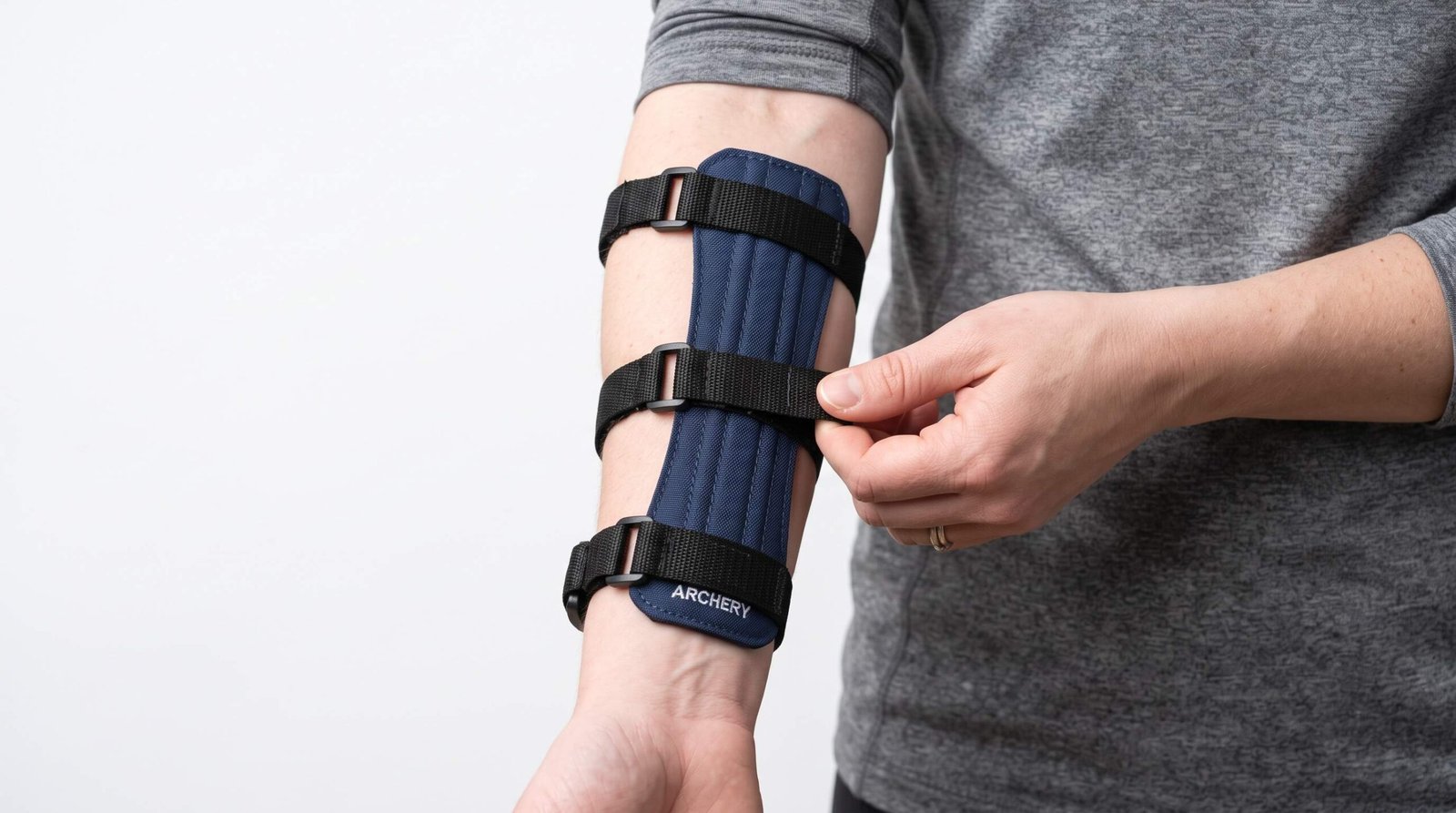
Strap count: 2 vs 3 straps. Two-strap guards hold at the wrist and below the elbow. They work fine on shorter guards. Three-strap guards add a middle anchor point, which keeps the guard from bowing away from your arm or rotating at full draw. On anything 7 inches or longer, we suggest three straps.
Material Considerations
Indoor vs outdoor. Leather is great at an indoor range where it stays dry. Outdoors, especially in rain or on dewy morning field courses, nylon handles moisture far better. Wet leather gets heavy, stretches, and can crack as it dries if you don’t care for it.
Hot weather. If you shoot through the summer, nylon and ventilated EVA guards breathe much better than leather. A solid leather bracer on a 90-degree day turns your forearm into a sweat pool, and the guard starts slipping. Perforated synthetic guards solve that.
Budget Guide
$10-15: Basic foam or nylon. This tier is fine for beginners. Look for a rigid insert (not just padded fabric), at least two adjustable straps, and clips rather than Velcro alone. They’ll protect you while you figure out if archery sticks.
$20-30: Mid-range ballistic nylon. This is the sweet spot for most archers. You get three straps, a durable CORDURA or ballistic nylon shell, better-quality elastic, and a contoured shape. Bear Archery and SAS models in this range can last years with basic care. If you know you’re committed, skip the bargain bin and start here.
$35-50+: Molded EVA and competitive-grade. Beiter, Legend, and other target-focused brands live here. Expect a precision-molded shape, ventilation, a very low profile, and premium strap hardware. These make sense once you’re shooting tournaments or practicing several times a week.
Whatever tier you pick, check three things: the insert should be stiff enough that you can’t fold it in half easily, the straps should adjust without tools, and the inside surface should be smooth so it doesn’t rub your skin raw over a long session.
How to Wear an Arm Guard Correctly
A surprising number of beginners wear their guard wrong.
Inner forearm only. The guard goes on the inside of your bow arm, the soft side that faces the string. It does nothing on the outside of the arm. If you’re right-handed, it goes on your left arm. Left-handed, your right.
Position it in the strike zone. Place the bottom edge about 1 inch above your wrist and the top edge about 2 inches below your elbow crease. That leaves room for your wrist and elbow to move naturally while covering the area the string actually hits.
Snug, not strangling. Use the one-finger test. With the guard strapped on, you should be able to slide one finger under each strap, but no more. Tighter than that and you’ll cut circulation and feel your hand tingle after a few ends (a set of arrows shot before walking to the target). Looser and it’ll shift.
Check at full draw, not at rest. Your forearm muscles change shape when you draw the bow, and your arm rotates slightly. A guard that looks perfect while your arm hangs at your side might sit off-center at full draw. Strap it on, draw the bow (or have a friend watch while you hold at anchor), and confirm the guard sits squarely in line with the string.
A guard that slides mid-draw is useless. If you notice it rotating toward the top of your arm during the shot, tighten the straps, switch to a three-strap model, or try a smaller size. A guard that’s moved out of position won’t stop the string, and a loose strap can actually snag it.
When You Don’t Need an Arm Guard
Some archers can skip it. That usually describes an experienced compound shooter who has dialed in consistent elbow rotation, shoots with a release aid, and rarely or never feels string contact. Their bow arm sits naturally out of the string’s path, shot after shot.
You can test this yourself. Wear a short-sleeve shirt and shoot a few ends at your normal draw. If you see no red marks, and the string clearly tracks well clear of your bow arm, you’ve proven your arrow and string clearance. Some coaches suggest a strip of masking tape or a dab of lipstick on the string to see whether it touches your arm at all.
Even then, keep one in your bag during the learning phase. Fatigue changes your form. A long session, heavy clothing, or a new bow can put your arm back in harm’s way. A guard weighs nothing and costs less than a dozen arrows. When you’re putting in hours at the range in front of a backyard setup (our guide to archery targets covers what to shoot at), late-session fatigue is exactly when string slap shows up.
Care and Replacement
Clean nylon with mild soap. Hand-wash with warm water and a bit of dish soap, then let it air dry. Skip the washing machine and the dryer, which can warp the plastic insert and kill the elastic.
Condition leather. Wipe leather bracers with a damp cloth after sweaty sessions and apply a leather conditioner every few months. If it gets soaked, let it dry slowly at room temperature, never next to a heater.
Replace when straps lose their hold. Stretched or frayed straps let the guard shift, and a guard that flops around can snag the string rather than deflect it. That’s worse than having no guard.
Worn elastic means replace it now. Elastic loses its stretch over time, especially in hot weather. If you have to cinch a strap to its last notch to get a snug fit, or the elastic looks thin and shiny, swap the guard out.
If you’re still building your kit, USA Archery partner Archery 360 has an ultimate beginner’s guide to learning archery fundamentals that pairs well with this one.
Frequently Asked Questions
Do beginners really need an archery arm guard?
Yes. Beginners are the archers most likely to get hit by the string because their grip and elbow position haven’t settled yet. A guard prevents painful welts and, just as important, prevents the flinch that develops after a few hits. Most ranges and coaches expect new archers to wear one, and a basic nylon guard costs only $10-15.
Where exactly does an arm guard go?
It goes on the inner forearm of your bow arm, the arm holding the bow. Right-handed archers wear it on the left arm, and left-handed archers wear it on the right. Position it from about 1 inch above the wrist to about 2 inches below the elbow crease, centered on the soft inside of the forearm that faces the string.
What is the best archery arm guard for beginners?
For most beginners, a three-strap ballistic nylon or CORDURA guard in the $15-25 range is the best choice. Models from SAS and Bear Archery are good examples. They’re light, weather-resistant, adjustable, and durable enough to last through your learning phase. Traditional shooters may prefer a full-length leather bracer, while compound shooters can often get by with a short wrist guard.
What is the difference between an arm guard and a bracer?
There’s no functional difference. Bracer is the older, traditional term, and arm guard is the more common modern term. Both describe a protective piece worn on the inner forearm of the bow arm. In practice, people tend to use “bracer” for leather and full-length traditional styles, and “arm guard” for nylon, plastic, and competition models.
Can you shoot a compound bow without an arm guard?
Yes, many experienced compound archers shoot without one. Compound bows have higher brace heights, and a release aid creates a cleaner string path, so contact is less common. Beginners should still wear one, though, because poor elbow rotation can put the forearm in the string’s path. A short guard also keeps bulky sleeves from catching the string.
Why does my bowstring keep hitting my arm?
Repeated string slap almost always comes from form. The most common causes are gripping the bow too tightly, letting your bow arm elbow point down or rotate inward, or hyperextending your elbow. Try rotating your elbow so the inner crease faces more vertically and let the bow rest loosely in the base of your thumb. A low brace height or loose sleeve can also contribute.
How tight should an archery arm guard be?
Snug enough that it doesn’t slide or rotate at full draw, but loose enough to fit one finger under each strap. If your hand tingles or your fingers turn pale, it’s too tight. If the guard shifts toward the top of your arm when you draw, it’s too loose. Always check the fit at full draw rather than with your arm hanging at rest.


