

Archery Lessons: A Beginner’s Complete Guide to Getting Started in 2026
December 22, 2023 | by buyarcheryequipment.com
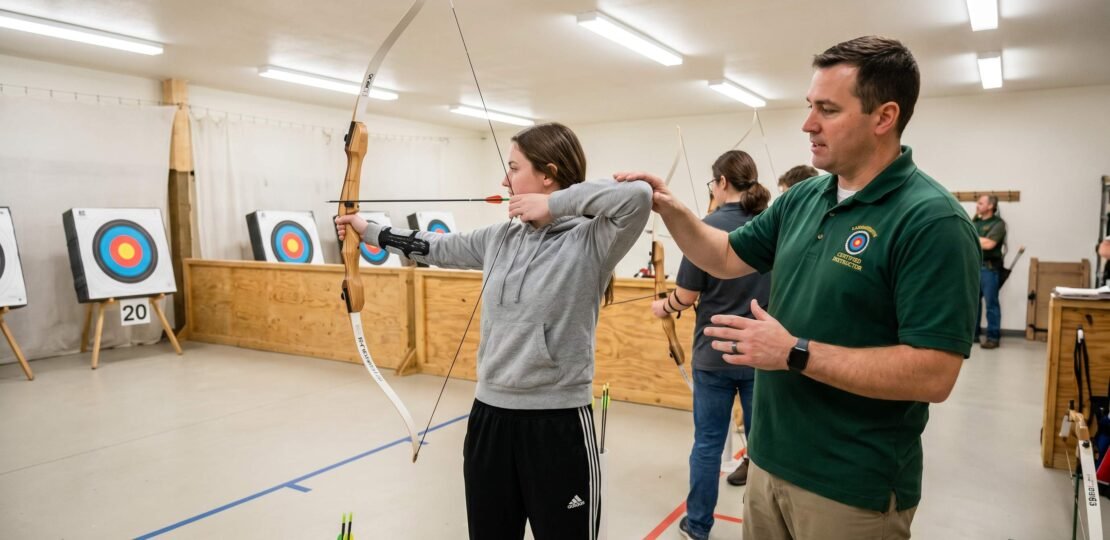
Archery Lessons: A Beginner’s Complete Guide to Getting Started in 2026
Thinking about picking up a bow? Smart move. Archery is one of those rare sports where a complete beginner can feel real progress within a single afternoon, and where the gear, the form, and the mental game keep rewarding you for years. But here’s the thing: trying to teach yourself from YouTube videos is the fastest route to bad habits, sore shoulders, and a frustrating plateau. Proper lessons solve that problem before it starts.
This guide covers everything you need to know before booking your first session: what lessons actually involve, what they cost, how to find a certified instructor, and how long it takes before you start hitting where you aim.
What Are Archery Lessons?
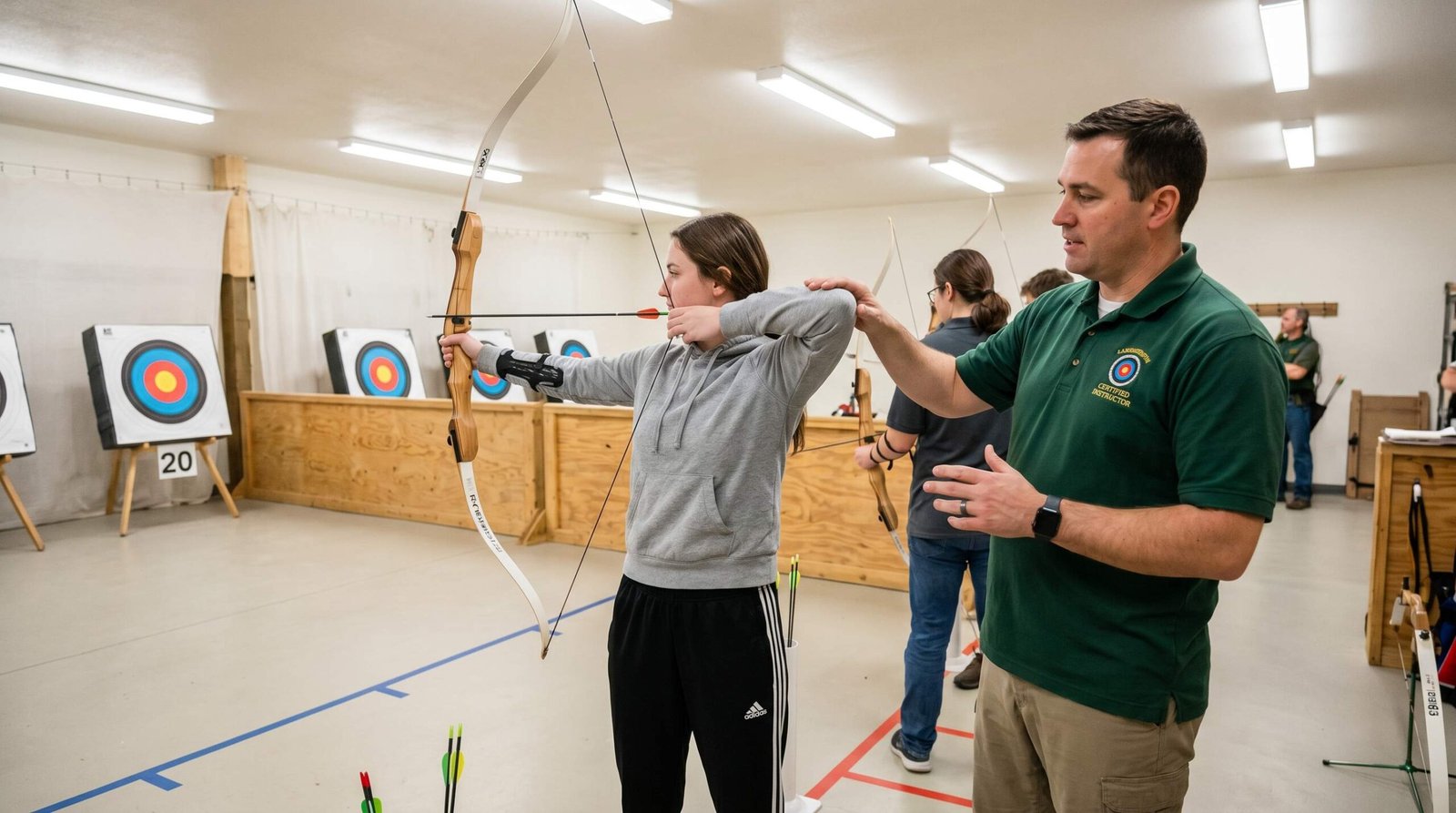
Archery lessons are structured instructional sessions where a certified or experienced coach teaches you the fundamentals of safely shooting a bow and arrow. A typical lesson covers range safety, equipment setup, stance, grip, draw technique, anchor point, aiming, and release. Most beginner lessons last 60 to 90 minutes, include loaner equipment, and take place at an indoor range, outdoor field, or archery club.
That paragraph above is the short answer. The longer answer is that lessons vary wildly depending on who’s teaching, what style of archery you want to learn (target, traditional, compound, barebow, or 3D), and whether you’re shooting solo or in a group. We’ll break all of that down below.
What to Expect in Your First Archery Lesson
Your first session sets the tone for everything that follows. A good instructor will move slowly, repeat the basics, and resist the urge to push you toward longer distances before your form is solid. Here’s what a well-run intro lesson typically looks like.
Safety Briefing
Before you ever touch a bow, your coach will walk you through range rules. Expect a 10 to 15 minute talk covering shooting line etiquette, whistle commands (one whistle to shoot, two to retrieve arrows, three for an emergency stop), how to carry arrows correctly with points down, and what “hot” and “cold” ranges mean. You’ll also learn what to do if an arrow falls off the rest mid-draw, how to nock an arrow properly, and why you never dry-fire a bow. None of this is optional, and any instructor who skips it is one you should walk away from.
Equipment Overview
Next, you’ll get introduced to the bow you’re using. Most beginner lessons start you on a recurve bow with a draw weight between 14 and 24 pounds, which is light enough that you can focus on form without fighting the bow. Your instructor will name the parts: riser, limbs, string, nocking point, arrow rest, sight (if equipped), and stabilizer. You’ll learn how to identify the cock vane on an arrow, how to check arrow length against your draw, and how to set up an arm guard and finger tab or release aid. If you’re curious about gear before your first lesson, browsing local archery stores near you can give you a sense of what’s available, though we suggest waiting until after a few lessons before buying your own setup.
Stance and Form Basics
This is where most of your first hour goes. Your coach will walk you through the eleven steps of shooting (the official USA Archery progression), but the early focus stays on four things: feet placement, posture, bow grip, and string hand position. You’ll likely spend 15 to 20 minutes drawing the bow without an arrow, learning what a proper anchor point feels like (string touching the corner of your mouth or under your chin, depending on style), and practicing the release motion. It feels slow. It is slow. It’s also the difference between a shooter who plateaus at 30 yards and one who keeps improving for decades.
First Shots
You’ll start shooting at close range, usually 10 to 15 feet from the target. That’s intentional. Close-range work lets you focus on form rather than where the arrow lands, and it builds confidence fast. Most beginners group their first six arrows within a foot of each other by the end of the lesson. By session two or three, you’ll typically move back to 10 yards, then 15 or 20 by session four or five. Expect to shoot somewhere between 30 and 60 arrows in your first lesson, with breaks in between to review form.
Types of Archery Lessons
Not all lessons are created equal. The format you choose affects cost, pace, personal feedback, and how quickly you progress. Here are the three main options.
Group Lessons
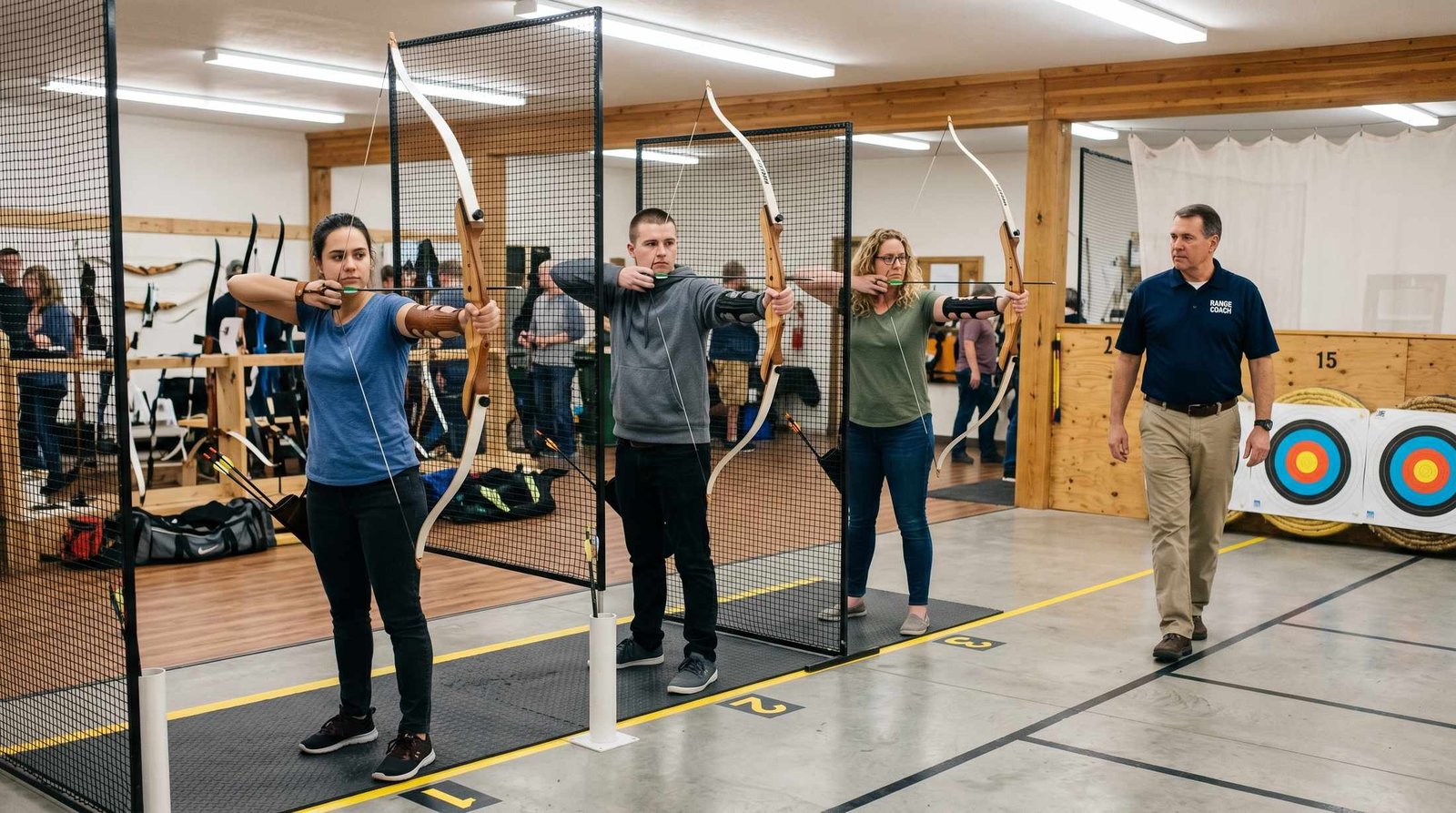
Group lessons are the most common entry point and usually the most affordable. You’ll shoot alongside four to twelve other beginners, with one coach (sometimes two) splitting attention across the line. Pros: cheaper, social, less intimidating for shy beginners. Cons: less individual feedback, harder to ask detailed questions, pace set by the slowest learner. Group classes are great if you want to test the waters without committing to a private coach, and they work especially well for kids who benefit from peer energy. Many ranges offer beginner archery classes as multi-week packages, which is usually a better value than booking single sessions.
Private Lessons
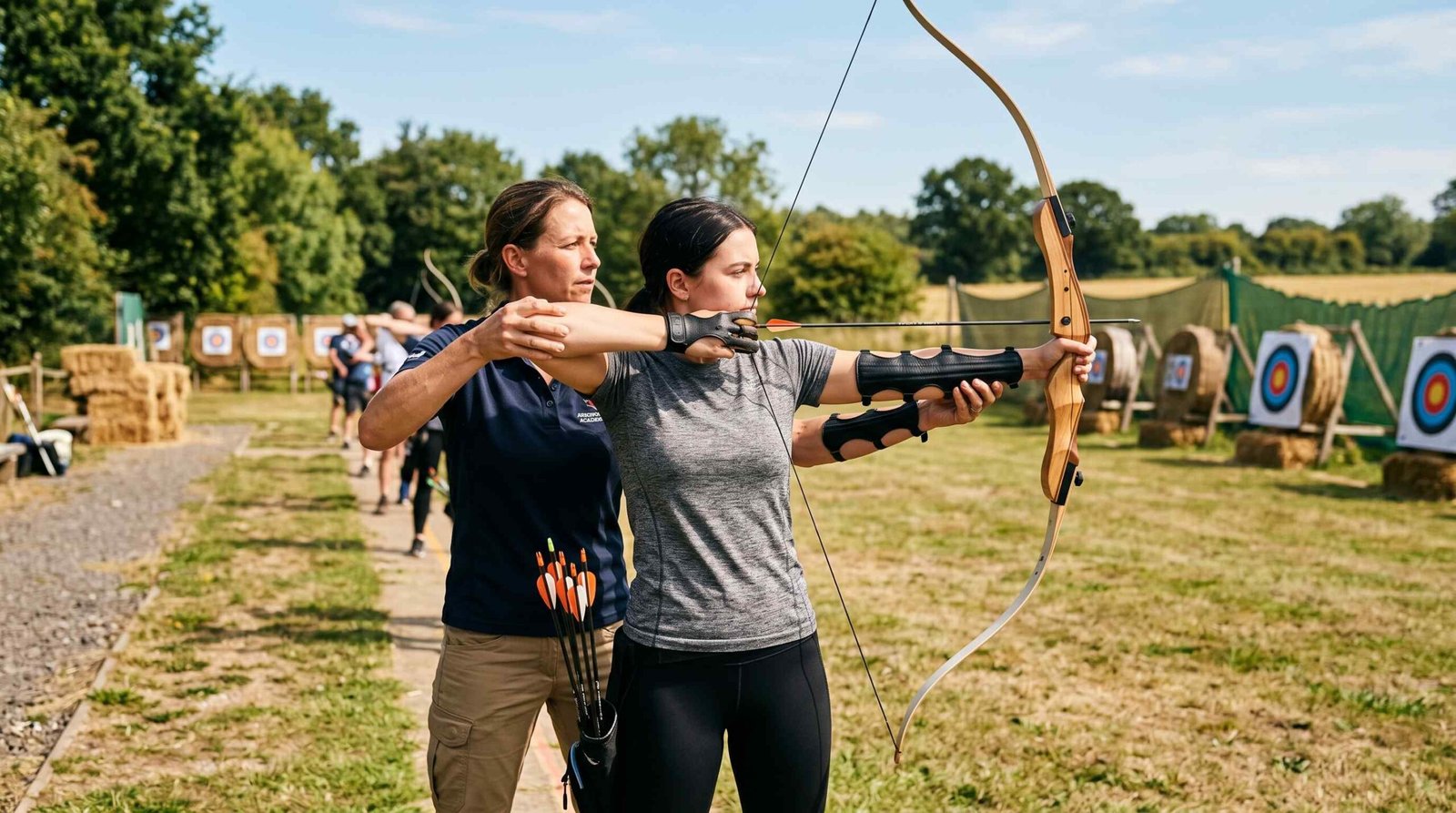
Private lessons mean one coach, one student, and a full hour of focused instruction. This is the fastest path to skill, especially if you’re aiming for competition, hunting, or a specific discipline. A good private coach will video your shot cycle, diagnose form issues you’d never spot yourself, and tailor drills to your build and goals. Pros: rapid progress, deep technical feedback, flexible scheduling. Cons: significantly more expensive, can feel intense for casual beginners. We suggest mixing the two: take a group package first to learn whether you actually enjoy the sport, then add private sessions every few weeks once you know you’re committed.
Online Lessons
Online archery instruction has grown a lot in the past few years. You’ll find video courses, live one-on-one Zoom sessions with certified coaches, and form-review services where you submit a clip of your shot and get written or video feedback within a day or two. Pros: cheaper, no travel, lets you work with coaches anywhere in the world. Cons: you need your own bow and a safe place to shoot, and a remote coach can’t physically adjust your stance or grip. Online lessons work best as a supplement to in-person coaching, or for shooters in rural areas who don’t have a club within driving distance.
How Much Do Archery Lessons Cost?
Pricing varies by region, instructor experience, and lesson format. Urban ranges and certified Level 3 coaches charge more; rural clubs and beginner-level instructors charge less. Here’s a clear breakdown of what you should expect to pay in 2026.
| Lesson Type | Typical Cost | Equipment Provided | Best For |
|---|---|---|---|
| Group Lessons | $10 to $30 per hour | Yes, usually included | Beginners testing the sport, families, kids, social learners on a budget |
| Private Lessons | $80 to $100 per hour | Yes, usually included | Serious beginners, competitive shooters, hunters preparing for season, fast progress |
| Online Lessons | $15 to $40 per session | No, student supplies own gear | Intermediate shooters wanting form review, rural shooters, supplemental coaching |
| Package Deals (6-session group) | $50 to $150 total | Yes, usually included | Committed beginners ready for a structured intro program |
Package deals are almost always the better value. A six-session group package at $120 averages out to $20 per session, often with equipment included, versus $25 to $30 per drop-in. If your local range offers a “Try Archery” day for $15 to $25, that’s a low-risk way to find out whether you enjoy the sport before booking anything longer.
Equipment rental, if not bundled, typically runs $10 to $20 per session and covers a bow, arrows, arm guard, and finger tab. Some ranges will credit your rental fees toward a future bow purchase if you buy from them, which is worth asking about.
How to Find a Qualified Archery Instructor
Finding a good coach matters more than finding a cheap one. Here’s how to vet instructors before you hand over your money.
Check Certification Levels
USA Archery runs the main certification program in the United States, and their tiered structure tells you a lot about what a coach knows. USA Archery instructor certification has three main levels: Level 1 covers introductory instructors qualified to teach beginner group classes, Level 2 covers experienced coaches who can work with developing shooters and small competition teams, and Level 3 covers advanced coaches trained in biomechanics, mental game, and high-performance development. Any coach teaching beginners should have at least Level 1. If you’re investing in private lessons, look for Level 2 or higher.
Use the USA Archery Club Finder
The fastest way to locate certified instructors near you is the official USA Archery find-a-club tool. Filter by zip code, and you’ll see a list of affiliated clubs and ranges, most of which employ certified coaches and host beginner programs. Affiliated clubs follow USA Archery safety standards and curriculum, which adds a layer of accountability you don’t always get at unaffiliated commercial ranges.
Read Reviews and Visit First
Before committing, read Google reviews for the range or club, and if possible, drop by during a class to watch. A good instructor stays calm, gives specific corrections instead of vague praise, and never lets students shoot unsafely for the sake of momentum. A bad instructor rushes the line, ignores form, and treats lessons like supervised fun rather than teaching. Trust your gut. If something feels off in a trial visit, it’ll feel worse three lessons in.
Ask About Their Specialty
Coaches often specialize. Some focus on Olympic recurve, others on compound, others on traditional or barebow. If you already know you want to hunt with a compound, find a coach who shoots and teaches compound. If you’re drawn to the meditative feel of traditional archery, find a coach who teaches instinctive shooting. A great Olympic recurve coach can teach you compound basics, but their depth of knowledge is in their discipline.
Archery Lessons for Kids vs. Adults
The fundamentals are the same, but the teaching approach is different. Knowing the difference helps you pick the right program.
Kids and Youth Lessons
Children as young as 6 or 7 can start archery with appropriately sized equipment, though most programs target ages 8 and up. Youth lessons focus heavily on safety reinforcement, short attention-span-friendly drills, and game-based learning (balloon targets, point challenges, team relays). USA Archery runs two major youth programs worth knowing about: JOAD (Junior Olympic Archery Development) for kids serious about competition, and Explore Archery for casual beginners. Both pathways are detailed on the official USA Archery youth participation page. If your child shows real interest after a few months of casual lessons, JOAD is the natural next step.
Equipment for kids uses lighter draw weights (10 to 18 pounds), shorter arrows, and smaller risers. Don’t let a coach hand a kid an adult bow just because it’s available. Wrong-size equipment teaches bad habits and can cause shoulder strain.
Adult Lessons
Adults bring patience, focus, and questions, which makes them efficient learners. They also bring desk-job posture, tight shoulders, and overthinking, which can slow form development. A good adult-focused coach addresses both. Expect more emphasis on flexibility, posture, and the mental side of shooting. Adults often progress faster than kids in the first month because they can absorb technical explanations, but kids tend to catch up by month three because they don’t overthink the release.
Most ranges run separate adult and youth classes, though family lessons (parent plus child) are increasingly common and a great way to make archery a shared hobby.
What Equipment Do You Need for Archery Lessons?
For your first several lessons, the answer is almost nothing. Here’s the actual list.
What the Range Provides
Reputable ranges and clubs supply everything you need to shoot during your lessons: a bow sized to your draw length, arrows matched to that bow, an arm guard, and a finger tab or release aid. You won’t be expected to bring anything to your first session beyond yourself.
What You Should Bring
Wear a fitted shirt (loose sleeves catch the string), closed-toe shoes (sandals are usually banned on ranges), and tie back long hair. Leave hoodie strings, dangling jewelry, and bulky jackets at home. If you wear glasses, that’s fine, though most coaches will eventually suggest contact lenses or sport glasses for serious shooting. Bring water and snacks for longer sessions.
When to Buy Your Own Gear
We suggest waiting at least 4 to 6 lessons before buying anything. Your draw length, draw weight preference, and bow style preference will all evolve as you shoot more. The bow that feels great in lesson two often feels wrong by lesson eight. When you are ready to buy, start with a budget recurve setup (riser, limbs, string, arrows, tab, arm guard, quiver) which typically runs $250 to $450 for a solid entry-level package. Compound setups start higher, usually $500 and up for a beginner-ready bow.
If you find yourself wanting more casual, low-stakes shooting between lessons, formats like archery tag can scratch that itch without putting pressure on your developing form.
How Long Does It Take to Learn Archery?
Honest answer: depends on what “learn” means to you.
Hitting the Target Consistently
Most beginners can land arrows on a standard 122 cm target face at 10 to 15 yards within 2 to 4 sessions. By “consistently” we mean hitting the target nine or ten times out of ten ends. This is achievable in your first month.
Basic Competency
Reaching basic competency, meaning you can shoot tight groups at 18 to 20 yards, set up your own equipment, and self-correct minor form errors, typically takes 3 to 6 months of regular practice. “Regular” here means shooting one to two times per week with at least 50 to 100 arrows per session.
Intermediate to Advanced
Becoming a competitive intermediate shooter (consistent groups at 30 to 50 yards, scoring respectably in club tournaments) usually takes 1 to 3 years of structured practice. Reaching elite levels takes 5 to 10 years and a serious training program. The good news is that archery rewards consistency more than raw talent. Shooters who practice 30 minutes three times a week almost always outperform shooters who do one big four-hour session per week.
Plateaus Are Normal
Every archer hits walls. The most common ones come at the 3-month mark (first major form refinement) and the 12-month mark (when mental game starts mattering more than mechanical form). A coach is invaluable at both points. Self-taught shooters often quit at these plateaus. Coached shooters push through.
Frequently Asked Questions
Do I need to be in shape to take archery lessons?
No. Beginner archery uses light draw weights (14 to 24 pounds), which most adults and teens can handle without prior training. That said, archery does engage your back, shoulders, and core, and you’ll feel it after your first few sessions. If you have a shoulder injury or limited range of motion, mention it to your coach and they’ll adjust draw weight and form accordingly. Archery is also widely practiced by adaptive athletes, including wheelchair users and shooters with limb differences.
Can I take archery lessons if I wear glasses?
Yes, and many top archers wear glasses or contacts. Standard prescription glasses work fine for beginners. As you progress, you may want to switch to contacts or sport-specific shooting glasses because frames can interfere with sight pictures at longer distances. Don’t let eyewear stop you from starting.
What’s the difference between recurve and compound for beginners?
Recurve bows are simpler, lighter, and use no mechanical assistance. You hold the full draw weight at full draw, which builds form fast but tires you sooner. Compound bows use cams that reduce holding weight by 70 to 90 percent (called “let-off”), making it easier to hold steady and aim. Most coaches suggest beginners start on recurve regardless of long-term interest because it teaches cleaner form. You can switch to compound later without losing skills.
Is archery safe?
Yes, when proper safety protocols are followed. The National Safety Council ranks archery as safer than golf, bowling, and tennis. Injuries happen, but they’re almost always from ignoring range rules, using damaged equipment, or shooting unsupervised in unsafe environments. Lessons with a certified coach at a real range are about as safe as any sport you can pick up.
Can I learn archery just from YouTube?
Technically yes, practically no. YouTube can teach you what good form looks like, but it can’t see your draw, anchor, or release. Self-taught shooters develop subtle form flaws that become deeply ingrained within weeks and take months to fix later. A handful of in-person lessons in your first three months will save you years of frustration. Use YouTube as a supplement, not a substitute.
Do I need to commit to a long-term program?
No. Most ranges offer single-session drop-ins or short 3 to 6 lesson packages, which is the right starting point for most people. Don’t sign up for a year of weekly private lessons until you know you love the sport. Try a beginner group package first, then decide.
What should I do between lessons to improve faster?
Three things help most: stretching your shoulders and back daily, doing strength work with a stretch band that mimics the draw motion (called SPT, or specific physical training), and mentally rehearsing your shot cycle. If you have a backyard with safe distance and a quality target, shooting 30 to 50 arrows three times a week between lessons accelerates progress significantly. Without that space, even dry-draw practice with a properly assembled bow (never dry-fire) helps build muscle memory.
RELATED POSTS
View all

 Photo by KAL VISUALS on Unsplash
 Resources for Finding Quality Archery Equipment and Tools for Learning and Improving at Archery
December 22, 2023 | by buyarcheryequipment.com
 Photo by Robin Battison on Unsplash
 Resources for Finding Quality Archery Equipment and Tools for Learning and Improving at Archery
December 22, 2023 | by buyarcheryequipment.com